
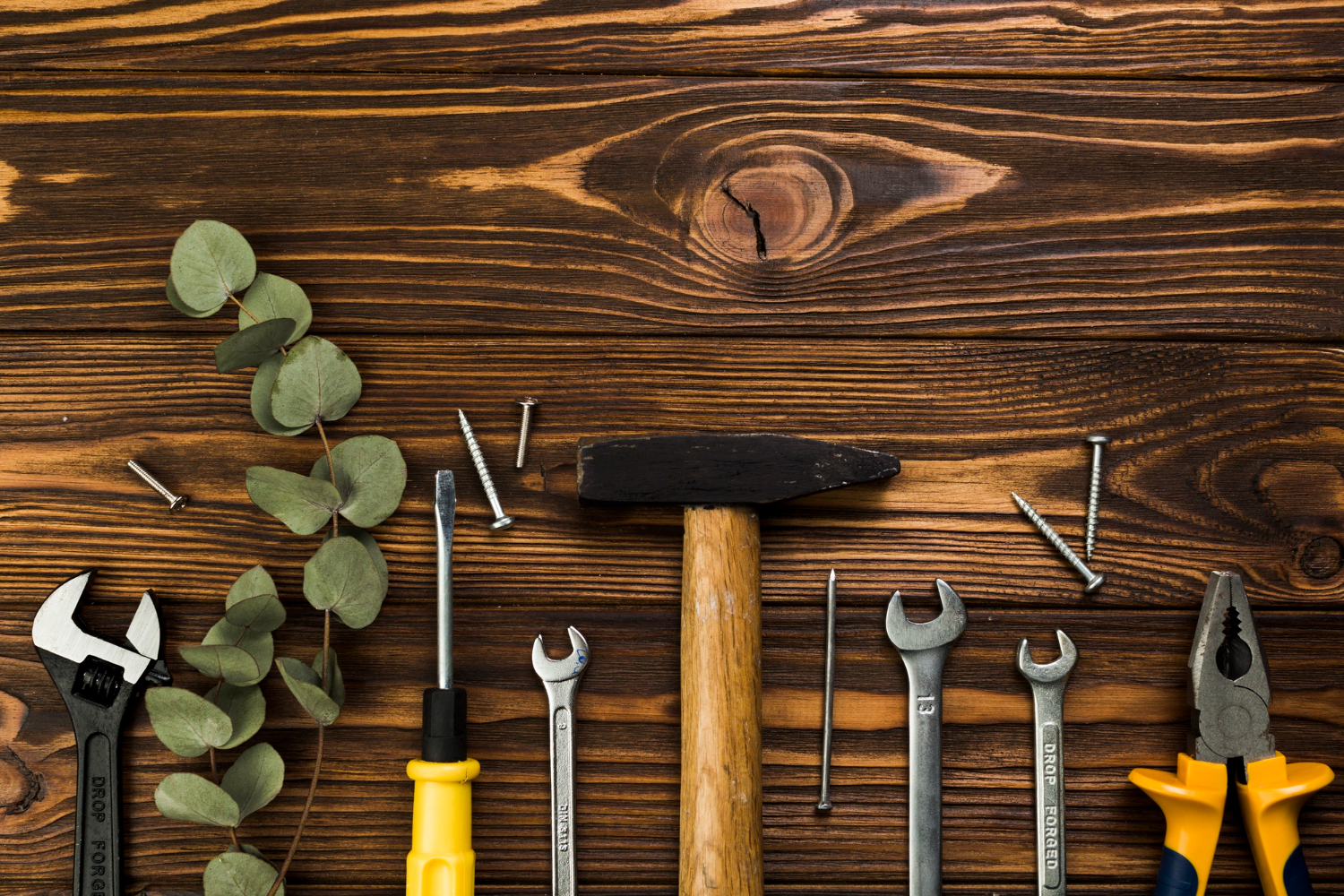
Owning a home comes with plenty of rewards, but it also means dealing with the occasional repair, maintenance task, or weekend DIY project. The good news? You don’t need a garage full of expensive equipment to handle most household jobs. A well-stocked toolbox with a handful of quality hand tools can save you time, money, and the frustration of waiting for someone else to fix a minor issue.
Whether you’re hanging a picture, tightening a loose cabinet handle, or assembling new furniture, these are the essential hand tools every homeowner should have.
1. Claw Hammer
A claw hammer is one of the first tools most people buy—and for good reason. It’s useful for everything from hanging artwork to driving nails into wood. The curved claw on the back also makes removing old nails quick and easy.
Choose a hammer with a comfortable grip and a weight of around 16 ounces. It’s heavy enough for most household projects without being tiring to use.
2. Tape Measure
Nothing derails a project faster than guessing measurements. A reliable tape measure is essential for everything from buying furniture to installing shelves.
Look for one that’s at least 25 feet long with easy-to-read markings and a sturdy locking mechanism. You’ll use it far more often than you might expect.
3. Screwdriver Set
Loose door hinges, cabinet hardware, light switch covers, and electronics all require different types of screwdrivers. A basic set should include both flathead and Phillips-head screwdrivers in several sizes.
If you want to save space, consider a multi-bit screwdriver with interchangeable tips. It offers versatility without cluttering your toolbox.
4. Adjustable Wrench
Instead of buying multiple wrench sizes, an adjustable wrench can handle a wide range of nuts and bolts. It’s especially useful for plumbing repairs, assembling furniture, and tightening fixtures around the house.
An 8-inch adjustable wrench is a practical size for most everyday jobs.
5. Pliers
Pliers provide the grip your hands simply can’t. They help pull nails, bend wire, hold small parts, and loosen stubborn objects.
A combination of slip-joint pliers and needle-nose pliers will prepare you for most household tasks. Needle-nose pliers are particularly useful for working in tight spaces.
6. Utility Knife
Every homeowner finds themselves opening boxes, trimming materials, cutting carpet, or scoring drywall at some point. A sharp utility knife makes these jobs cleaner and safer than using a kitchen knife.
Choose one with retractable or replaceable blades for convenience and safety.
7. Level
Crooked shelves, picture frames, and curtain rods can make an otherwise beautiful room look unfinished. A level ensures everything is straight before you drill holes or drive screws.
A 24-inch level is ideal for general household use, though smaller torpedo levels are handy for tight spaces.
8. Hex Key (Allen Wrench) Set
If you’ve ever assembled flat-pack furniture, you’ve probably used an Allen wrench. While many products include one, having your own complete set is far more convenient.
Hex keys are also commonly used on bicycles, appliances, and various home fixtures.
9. Handsaw
Power tools are great, but sometimes a simple handsaw is all you need. It’s perfect for cutting small pieces of lumber, trimming branches, or making quick adjustments without dragging out larger equipment.
A quality handsaw with a comfortable handle can last for years with proper care.
10. Stud Finder (Optional but Highly Recommended)
While technically not a traditional hand tool, a stud finder can prevent costly mistakes when mounting TVs, shelves, or heavy mirrors. Finding a wall stud ensures your fasteners have solid support instead of relying solely on drywall anchors.
It’s an inexpensive tool that can save you from damaged walls—and damaged belongings.
Don’t Forget the Toolbox
Even the best tools become difficult to find when they’re scattered throughout the house. A sturdy toolbox keeps everything organized and protected while making it easy to grab exactly what you need when a repair pops up.
Look for one with compartments for small items like screws, nails, and drill bits so everything stays in its place.
Quality Beats Quantity
It’s tempting to buy the biggest tool kit available, but many of those sets include tools you’ll rarely use. Instead, focus on purchasing fewer, high-quality tools that feel comfortable in your hand and are built to last.
Good tools can serve you for decades with minimal maintenance, making them a worthwhile investment for any homeowner.
Every home requires a little upkeep, but having the right tools on hand makes those tasks much less intimidating.
Starting with these essential hand tools gives you the confidence to tackle common repairs, complete DIY projects, and handle everyday maintenance without calling in a professional for every small job.
Build your collection gradually, choose quality over quantity, and before long you’ll have a toolbox that’s ready for almost anything your home throws your way.